
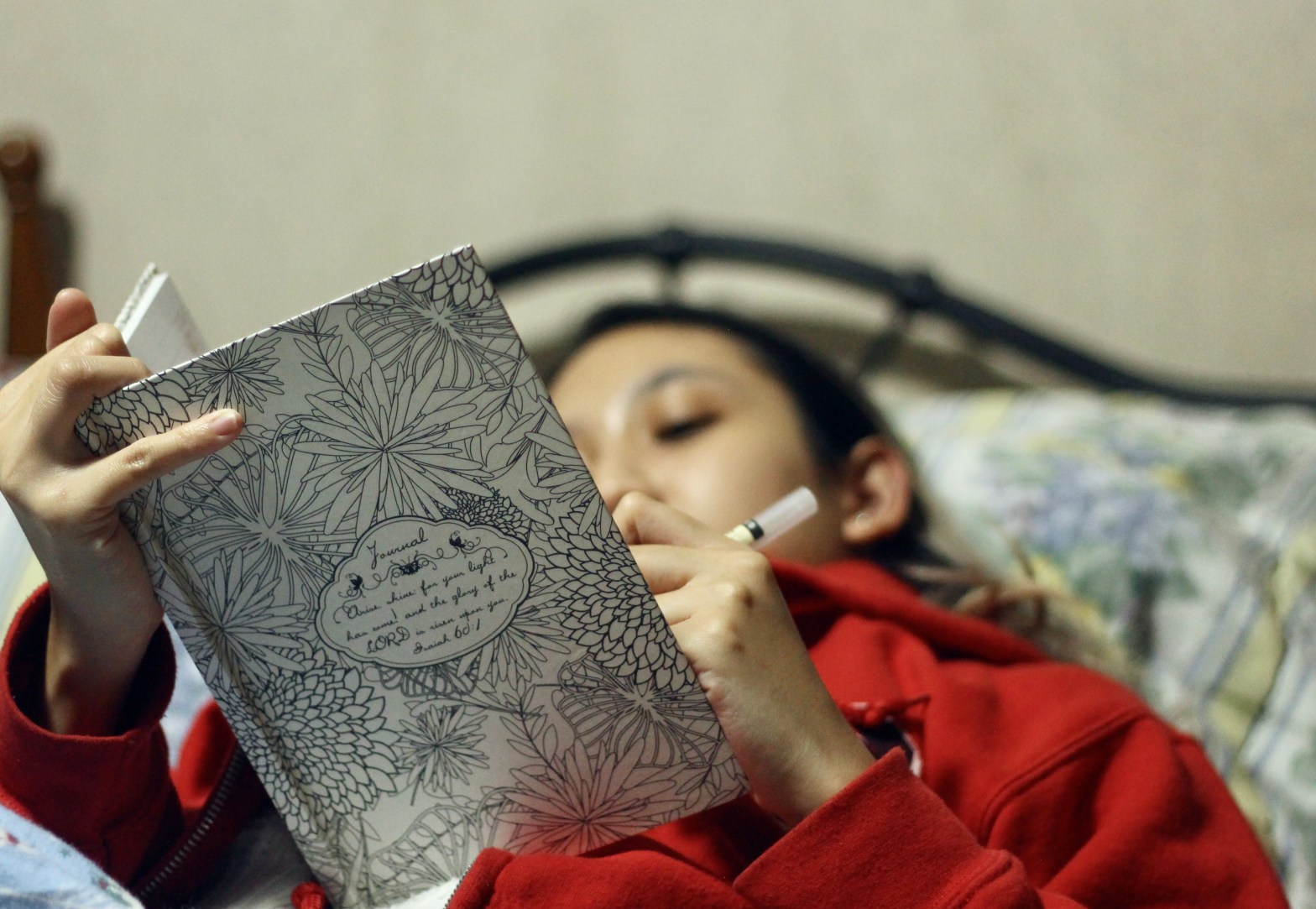
Writing for my blog is like journaling but more positive and with a purpose. It is not about the dirty, ugly, and painful things I go through.
All of these things have a special space reserved in my journal. Something I hope no one will ever read. Sadly, journaling was something I barely did at the height of all my problems and life questions in the last few years.
How it All Began
Journaling was something I got into when I was in high school. I was writing my thoughts about a topic, an issue. How it made me feel, how I thought things should be. Then it kept going and going. I could write page after page after page. No one had to listen to me. No one told me I was talking too much. Most importantly, no one told me to shut up.
In between the covers of my journal, my opinions were safe. I did not fear being judged or cut off by the more powerful egos of those around me.
I no longer felt small.
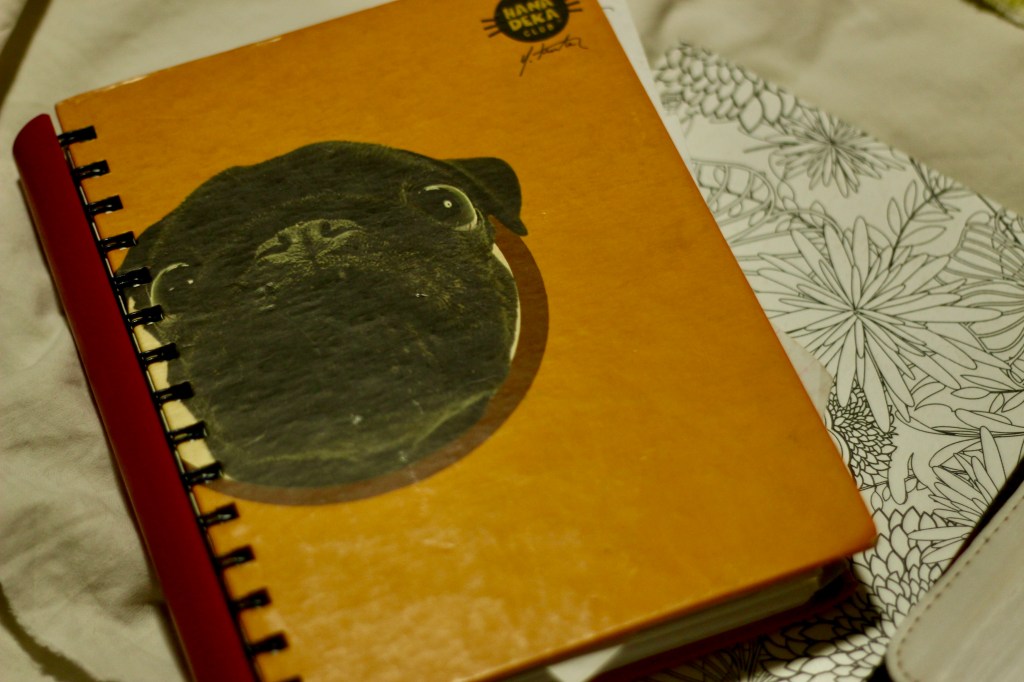
A cute pug notebook held things only 14-year-old me could come up with. I wish I explored writing more and allowed my thoughts to grow. Sadly, what was written was left on a page to be forgotten forever.
As years went by, the innocence of journaling slowly disappeared.
People took notice, it felt like a chore, and some even tried to correct how I was doing it. Like, are there rules to doing this right?
But the correction and the attention snuffed out the joy in it. Over the past seven years, I forced myself out of necessity.
And that is something I hope to change. Since I am trying to fall back in love with things that make me smile this February, I would like to fall back in love with this daily habit.
The Journey Back
So I restarted journaling last December but as a chore. I had to do it as a part of this camp I volunteered in. It was not mandatory, but it felt like the right thing to do. From that week filled with cold December nights in a province called Isabela, journaling was a consolation prize I took with me to 2023.
Although January was tough, I have been at it almost daily, even if it is just one sentence, one word, or a feeling of defeat, success, or disappointment.
And for me, just a word can help me look at my situation from a distance. It helps put the pain away—even for just a second.
I hope to find solace once again in writing, in my journal, and in the pages I will fill as the year goes by.
I hope you do too!
Why Should I Journal?
For those of you who are still not convinced of taking advantage of this therapy-esque tool, here are a few good ways journaling has helped me:
1. Breathe
Take a pen and paper and write the word down. Consciously inhale and exhale as you pen down each letter. Flow with the strokes and remind yourself to breathe.
Journaling is daunting if you plan on filling up pages, but one-word journaling can still serve the same purpose. Check out this article by the Science of People that delves a little more into one-word journaling if that is where you want to start.
So when overwhelmed and short on time, just take a moment and breathe. Inhale up, exhale down.
2. Rant
Working alone and at home is a lonely thing sometimes. And when clients or life just seems so unreasonable, there are days when I have no one to talk to and no one on the same boat who would understand my pain or frustration.
And so I can rant on a paper and forget how annoying things have been in the past day, week, or the last hour.
Expressive writing has been around for centuries and is something licensed therapists use in their practice. This article by The Human Condition gives us an overview of writing therapy, how it works, and how you can use it too.
3. Acknowledge
As a part of writing therapy, journaling can help you recognize and understand your feelings. Life is a blur. We rush through things left and right and push aside time to sit and reflect on what is happening in our lives and how it affects our scenarios or situations.
Personally, there is no better way to acknowledge my messy emotions than when I see them written on paper. Recognition is different from a rant. It is an acknowledgment that I am sad, disappointed, or overwhelmed. And all the other feelings tied to that disposition.
The same article by The Human Condition talks about four conditions that may be treated by writing therapy—including anxiety and depression.
4. Accept
Even if I am stubborn, I cannot deny that I slowly learn to accept the things in my life after writing about them repeatedly. Things may never change, but I can change how I see and react to them.
And acceptance is a way for me to reach my goal of being thankful in all circumstances.
Gratitude journaling is a way to look at crappy circumstances and see the silver lining of the day, the morning, or even the moment. So maybe you’re stuck in a rut and can’t do anything about it. You can rant about it, acknowledge how it makes you feel, and in the end, accept that this is your situation. Then you can look ahead and look around. Maybe you can now see the specs of gold in all the crap.
Interested to learn more about it? Check out this guide to gratitude journaling from the Greater Good in Action project by UC Berkeley.
When all is said and done, you sit and write about it.
 Busyzi