
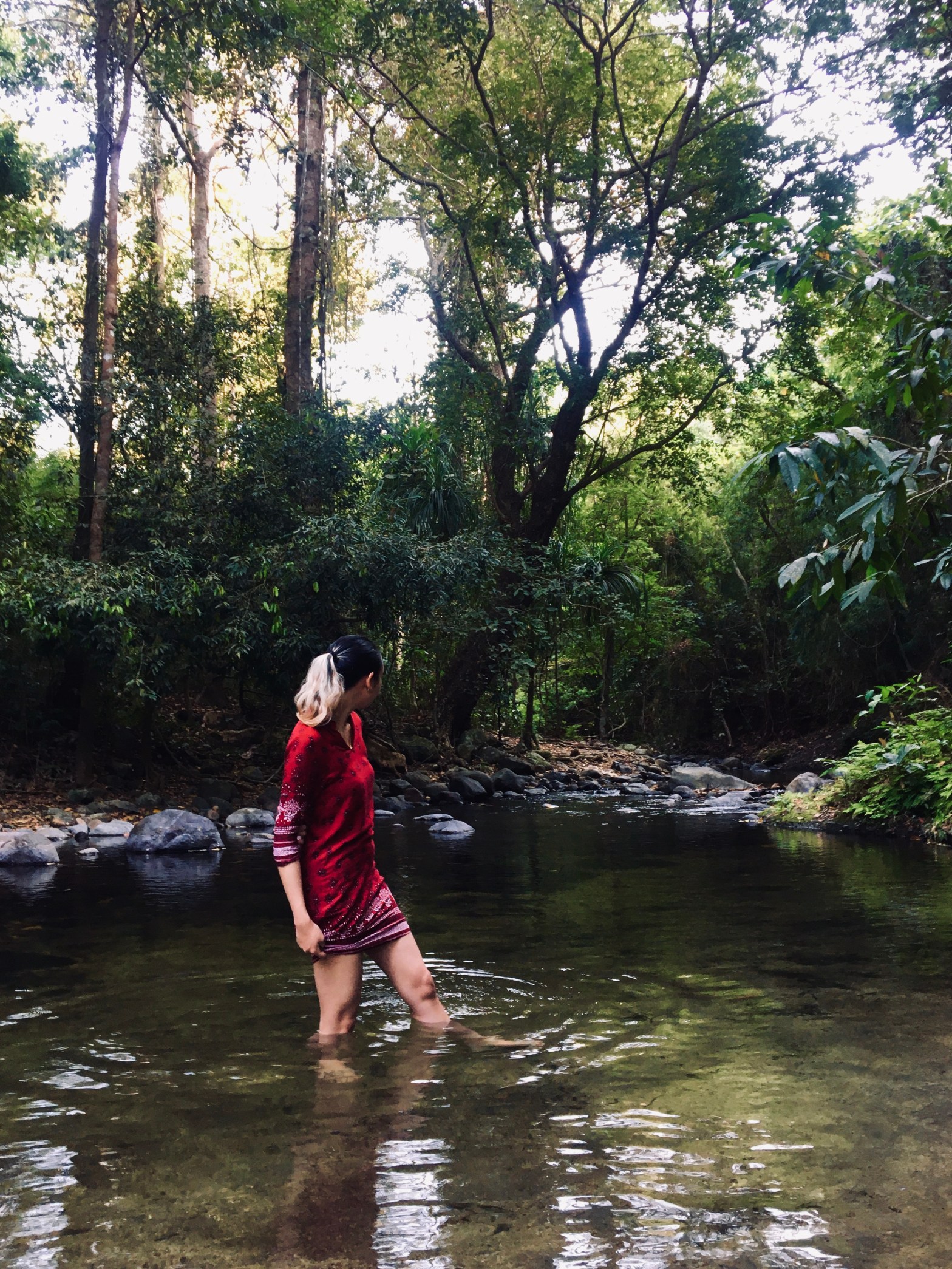
Stop. Look up and breathe.
I was walking my dog early the other week after a busy work morning, and instead of enjoying the blue sky above and birds chirping in the air, the gears in my head were running a mile an hour. I kept going over that one email from an unhappy client
Pausing under a tree as my dog did his business, I was reminded to push the email aside and be present under that pine tree and the Angel’s Trumpets overhead.
I am lucky to be in a generation that did not necessarily have to grow up surrounded by the grey spectrum of concrete jungles.
I lived in a city privileged to be surrounded by trees and mountains, a tiny creek trickled under an old stone bridge connecting two hills. Trees filled with bird songs greeted me in the cold early mornings, and flowers filled the lot next door. The city was near, but nature was nearer.
With fast urbanization, the next generations would never know the beauty of a simple, quasi-secluded life in the middle of a city.
Trees Turn Into Houses
Fast forward 5 years later, hills and trees facing my childhood house converted into concrete structures. Houses popped up left and right—destructive frames of people without long-term plans in the neighborhood. Instead, they invested cheaply and hoped to flip when the location develops. Wise for the pocket but heartless to the mountains.
A home facing tree-lined hills turned into a house facing modernized, grey, and bright green concrete residences. As the neighborhood developed, houses sprouted designed far from the 1940s American-esque designs of the old structures nearby. The firefly-lit nights of half a decade ago faded into rare spottings of blinking lights on cooler nights.
Urbanization comes at a cost. Be it trees, vegetation, kittens, and sometimes neighborhood dogs.
In a little more than 10 years, mountains quickly turned into a concrete neighborhood, and the world birthed a generation that grew up stuck indoors staring at screens.
Having worked in a concrete office and metal cubicles for 6 years, how much have I lived apart from the world I grew up in?
I wasted almost a decade of my life in the walls of an employer that promotes urbanization. I worked for clients who took land and its hilly terrain and turned them into flat structures ten times the value it was bought. Looking down on the hustle and bustle of a small busy city from my cubicle, I am ashamed of how much I benefit from the concrete roads and the real estate gain. I have definitely gained from the city road that broke the peace and silence of my neighborhood—once filled with only the whispers of the trees and the giggles of children playing among it.
We need to remember.
As we get older, life drains us from the need to look around and enjoy our surroundings. Busy chasing after what our age and what society asks from us, we forget to bask and enjoy the world available to us.
I keep reminding myself to look up and enjoy the sun, blue skies, and the wind in the trees.
Butterflies in the air and bees on the flowers can help slow your mind down from the faced-paced world of the employed and trying adults, too.
So here is to falling back in love with what nature offers.
Why Nature?
For those of you who feel that my love for nature is a fruitless, hopeless romantic’s tirade, here are a few benefits we can get from enjoying Nature:
1. Benefits Both Your Physical and Mental Health (Even Emotionally)
According to this article by Yale Environment 360, two hours in nature a week (compounded or in one go) may benefit your health. In the article, two hours is the pre-requisite for any benefits noted by study participants.
The studies discussed in the article have noted that nature can help with stress. Being in nature can: “lower blood pressure and stress hormone levels, reduce nervous system arousal, enhance immune system function, increase self-esteem, reduce anxiety, and improve mood.”
With all these benefits, why do we push aside this free antidote for an urbanized, concrete jungle and find ourselves down paths of medicine after medicine?
2. Forests are Therapeutic: Forest Bathing
Forest Therapy is based on the Japanese-coined practice of “Forest Bathing” or “shinrin-yoku” which means to bath or sit and immerse yourself in the forest. According to the Association of Nature and Forest Therapy, this practice can decrease stress hormones, boost immunity, and help heal. On top of that, surrounding yourself with nature can help you with your creativity, too!
In this Harvard Health Publishing article, forest therapy is conducted with a trained guide who sets the pace of a hike to “experience the pleasures of nature through all of their senses.” All the benefits of nature and trees may be yours through these sessions.
You can sign up for forest therapy programs in your area!
3. Restoration from Immersing and Floating on Bodies of Water
Nature is not only beneficial through trees, grass, and forests. The ocean, a lake, or any body of water can also help you mentally and physically.
This article by The Guardian talks about how bodies of water help us truly immerse in what nature has to offer and allows both our mind and body to be absorbed by the current and/or waves, fully taking us away from the mundane worries of the modern world.
Even my bath-hating dog seems to have found peace as we hiked near this little river, daring to cross it alone!
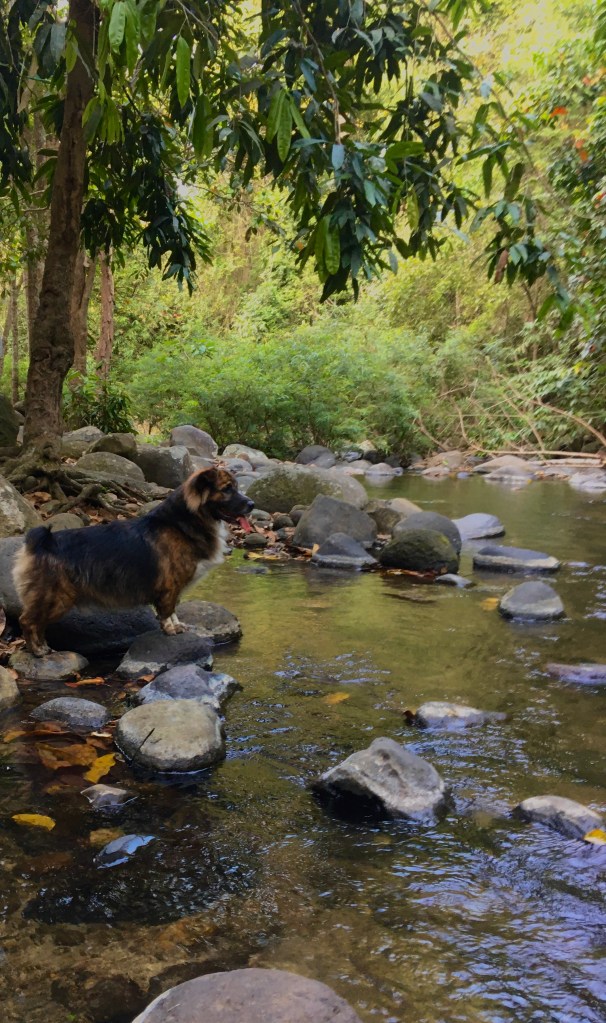
The world is a beautiful place. Let’s put our gadgets down and enjoy it!


2 thoughts on “Falling Back in Love: Nature”